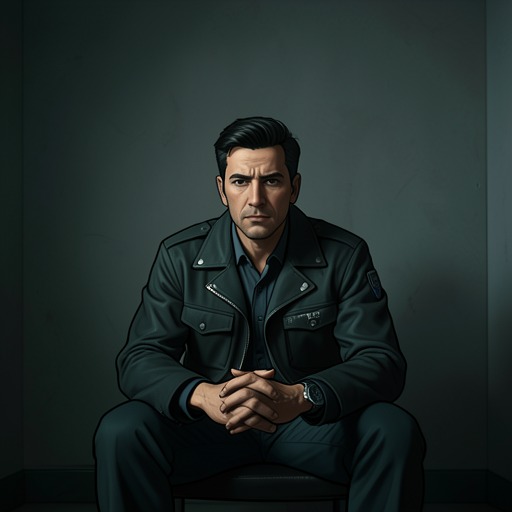
Perry O’Parsons, The One-Man Symphony
In Cold BloodPerry O’Parsons, The One-Man Symphony is Perry Smith’s old theatrical fantasy, revived as a recurrent dream during a summer of stupor and sweat-drenched sleep. Its imagined show begins as an elaborate act of self-display, but ends with the performer recognizing that the stage is a scaffold and that he is to be hanged. The fantasy makes performance and execution occupy the same stage: the entertainer’s grand entrance becomes an image of his helplessness before death.
The Dream Performance
The dream’s setting is a Las Vegas nightclub, vast and gaudy, packed with patrons but strangely silent. Wearing a white top hat and white tuxedo, Perry O’Parsons strides through a spotlight and changes roles from instrument to instrument: harmonica, guitar, banjo, and drums. He sings “You Are My Sunshine,” then tap-dances up a short flight of gold-painted prop steps to a platform and takes a bow. The sequence enlarges Perry’s familiar theatrical fantasy into a complete show, but its audience offers no applause. The room is full, mostly with men and mostly with Black patrons, yet the silence leaves the performer alone at the center of the spectacle.
Recognition and Reversal
Perry first understands the audience’s silence when he realizes that the patrons are phantoms: the ghosts of people who have been legally annihilated by hanging, gassing, and electrocution. Recognition immediately changes the meaning of the stage. The gold-painted steps are no longer props leading to a performer’s platform; they have led to a scaffold, and the platform opens beneath him. His top hat tumbles as he loses control of his body, and the dream ends in a vision of his own death. What began as a fantasy of commanding an audience becomes a scene in which Perry is absorbed into the company of the executed.
Recurrence and Significance
The dream returns in the context of Perry’s prolonged, sickly sleep, and its theatrical identity is distinctly his: an old fantasy recast as a recurring nightmare. Its movement from variety-show display to scaffold compresses performance, recognition, and execution into one sequence. The silent crowd supplies no response that could affirm the entertainer’s imagined triumph; instead, its ghostly presence makes the conclusion unavoidable within the dream. Perry O’Parsons thus becomes the vehicle through which the fantasy turns against its performer, transforming the desire to occupy the spotlight into a vision of the death awaiting him.